Review: Summer Personalized Ice Cream Embroidery
As an embroidery designer who has spent years digitizing files and consulting with small business owners, I approach every new machine embroidery design with a critical eye. It is not enough for a design to look cute on a screen; it must perform under the needle, withstand washing, and elevate the brand it represents. Recently, I evaluated the Summer Personalized Ice Cream Embroidery file to determine its viability for commercial use. This review focuses on how this specific asset functions within the context of branded merchandise, staff uniforms, and boutique product lines.
First Impressions: Visual Personality and Brand Fit
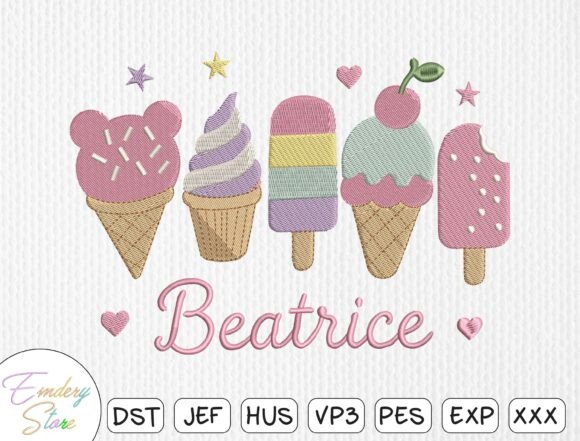
The initial visual impact of the Summer Personalized Ice Cream Embroidery is undeniably friendly and playful. The description highlights a charming aesthetic featuring the name "Beatrice" in a lovely pink script, framed by delicate elements. For a business owner, this signals a specific brand voice. It is not corporate or rigid; it is warm, inviting, and handmade. This makes it an excellent candidate for businesses that rely on personal connection, such as local bakeries, ice cream parlors, children’s boutiques, or creative studios offering personalized gifts.
However, from a professional standpoint, "playful" must not mean "amateur." The success of this design hinges on the execution of the script font. Script fonts are notoriously difficult to embroider because connecting letters can easily bunch up if the stitch density is too high or if the stabilizer is insufficient. A well-digitized version of this design should maintain legibility while preserving the fluidity of the handwriting style. If the loops are too tight or the underlay is weak, the final product will look messy rather than premium.
Real-World Applications for Small Business Merch
When considering where to apply this digital embroidery file, versatility is key. Here is how I envision this design performing across various commercial embroidery projects:
- Staff Uniforms and Aprons: For a café or sweet shop, embroidering this design on the chest pocket of an apron adds a touch of whimsy. It personalizes the staff member’s role, making them feel like part of a cohesive, friendly team. Ensure the thread colors contrast well against the fabric, especially if using dark navy or black aprons.
- Embroidered Patches: This design is ideal for creating iron-on or sew-on patches. Patches allow for inventory flexibility; you can produce a batch of generic patches and apply them to tote bags or caps as orders come in. The "delicate" framing mentioned in the description suggests that the border needs to be dense enough to prevent fraying but light enough to remain flexible.
- Tote Bag Design: Canvas tote bags are a staple for handmade brands. Placing this design centrally on a natural cotton tote creates a high-value handmade product that customers love to carry. The summer theme aligns perfectly with seasonal promotions or farmers' market giveaways.
- Cap Embroidery: While possible, cap embroidery requires caution. The curved surface of a baseball cap can distort script fonts. If you choose this application, ensure the design size is adjusted so the lettering does not wrap too far around the curve, which would make it unreadable from the front.
Technical Considerations and Production Risks
Before running this design on a production machine, there are several technical factors that must be addressed to avoid costly errors. The description mentions "delicate" framing, which often implies fine lines or satin stitches. These elements are vulnerable on textured fabrics.
Fabric texture plays a massive role here. If you are embroidering on a rough canvas or a thick towel, the delicate details may get lost or pulled into the fabric pile. In such cases, a cut-away stabilizer is non-negotiable to provide lasting support. For smoother fabrics like polo shirts or twill caps, a tear-away might suffice, but testing is essential.
Another critical factor is scale. Small business owners often want to maximize space, but shrinking a script design too much can cause the letters to merge. I recommend creating a printable mockup at the intended size first. Check if the name remains legible when reduced to a 3-inch width. If the details become indistinct, you may need to simplify the design or increase the hoop size.
Additionally, consider the thread colors. The default pink script may work beautifully on white or pastel backgrounds, but what happens when a client wants it on a dark uniform? You must verify if the design includes color stops or if you need to manually adjust the thread sequence to ensure visibility. High contrast is vital for brand recognition.
Impact on Brand Identity and Customer Trust
Consistency in brand identity builds trust. When a customer sees the same high-quality embroidery on your packaging, your staff’s apron, and their purchased tote bag, it reinforces professionalism. The Summer Personalized Ice Cream Embroidery contributes to this by offering a cohesive visual language. It tells the customer that attention to detail matters to your business.
For Etsy sellers and crafters, offering personalized items increases perceived value. A plain tote bag is a commodity; a tote bag with a custom-embroidered name in a charming script is a keepsake. This design allows for that personalization without requiring complex digitizing work from the seller, provided the file is set up correctly for name swaps or if it is used as a static logo element.
Practical Designer Notes for Implementation
To ensure the best results with this embroidery file, follow these practical steps before full-scale production:
- Test on Scrap Fabric: Always run a test stitch-out on the exact fabric you plan to use. Check for puckering, thread breaks, or registration issues.
- Verify Hoop Size: Confirm that the design fits within your machine’s maximum hoop area. Do not assume compatibility; check the dimensions provided with the file.
- Check Commercial Licensing: Before selling items made with this design, review the license terms. Most digital embroidery files allow for physical product sales, but some restrict mass production or require attribution.
- Evaluate Stitch Density: If the design feels stiff after stitching, the density may be too high. Adjusting pull compensation or reducing density in your editing software can improve the drape of the fabric.
- Create Client Mockups: Use digital tools to show clients how the design will look on their specific item. This manages expectations and reduces revision requests.
In conclusion, the Summer Personalized Ice Cream Embroidery holds significant potential for small businesses looking to add a sweet, personalized touch to their merchandise. Its success depends on careful technical execution, appropriate fabric selection, and strategic placement. By treating this design as a core component of your design assets and respecting the technical limits of embroidery, you can create finished products that delight customers and strengthen your brand presence.