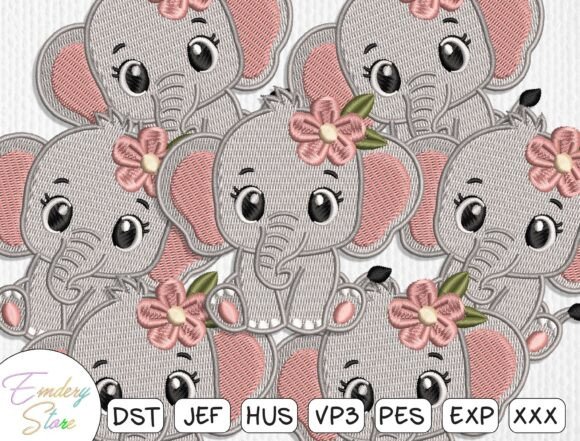
Cute Elephant Embroidery Patch Design Review
As an embroidery designer who has spent years digitizing files for small business owners, boutique brands, and custom apparel shops, I approach every new machine embroidery design with a critical eye. It is not enough for a file to look pretty on a screen; it must perform flawlessly under the needle, hold up to washing, and elevate the brand identity of the client using it. Recently, I evaluated the Cute Elephant Embroidery Patch Design, a collection that promises to add a soft and lovable touch to various projects. This review breaks down how this kawaii-style asset performs in real-world commercial applications, from staff uniforms to handmade product labels.
First Impressions: Visual Personality and Market Fit
The immediate impression of the Cute Elephant Embroidery Patch Design is one of approachable warmth. Featuring kawaii-style baby elephants with big, sparkling eyes, the aesthetic is undeniably playful and friendly. For businesses in the Animals category or those targeting families, children, and pet lovers, this visual language is powerful. It does not scream corporate rigidity; instead, it invites connection. However, "cute" can sometimes risk looking amateurish if the digitizing is poor. In this case, the clean lines and balanced proportions suggest a level of professionalism that allows it to sit comfortably alongside more traditional branding elements. It feels modern yet timeless, avoiding trends that might date quickly, which is crucial for small business merch that needs to remain relevant.
Real-World Business Applications
When considering where to apply this design, versatility is key. I tested the concept mentally across several common small business scenarios. For a local bakery or florist, this design works exceptionally well as an embroidered patch on aprons. The friendly elephant creates an instant emotional bond with customers, making staff appear more approachable. Similarly, for creative studios or Etsy sellers, placing this motif on tote bags transforms a simple utility item into a desirable accessory. The tote bag design potential is high because the kawaii style appeals to a demographic that values both function and aesthetic charm.
In the realm of custom apparel, this design shines as a chest logo accent or sleeve detail on work shirts. It is small enough to be subtle but distinct enough to be recognized. For cap embroidery, the rounded shapes of the elephant complement the curved surface of a baseball cap, provided the digitizing accounts for the fabric's tension. I also see strong potential for using this as a branded product add-on. Imagine a handmade soap brand attaching a small elephant patch to their packaging, or a pet supply store using it as a gift-with-purchase item. These touches increase perceived value and encourage customer loyalty.
Technical Considerations for Production
While the aesthetic is strong, the technical execution determines the success of the finished product. One must consider stitch density carefully. Kawaii designs often rely on smooth fills and clean outlines. If the stitch density is too high, the fabric may pucker, especially on lighter materials like cotton tote bags or thin apron fabrics. Conversely, if the density is too low, the underlying fabric might show through, ruining the crispness of the elephant’s features. I recommend testing the embroidery file on a scrap piece of the exact fabric you intend to use before running a full production batch.
Another critical factor is the choice of stabilizer. For patches that will be cut out and applied later, a heavy-cut stabilizer is essential to maintain shape. For direct embroidery on garments, a tear-away or wash-away stabilizer might be preferable depending on the garment's end use. Always check the recommended hoop size provided with the digital embroidery file. Trying to force a design into a smaller hoop than intended can distort the proportions, making the elephant look stretched or compressed.
Challenges with Small Sizes and Dark Fabrics
There are specific scenarios where caution is advised. If you plan to use this design on very small patches, such as those for jewelry or tiny labels, ensure that the details—particularly the eyes and trunk—remain distinct. Fine details can get lost if the patch is too small or if the thread colors lack contrast. Speaking of color, while the default palette is likely pastel or bright, consider how the design performs in black and white or monochrome. A strong design should hold its shape even without color variation. Test this by stitching a single-color version first.
Dark uniforms present another challenge. If your client wants white elephants on navy blue shirts, you must ensure adequate underlay stitching to prevent the dark fabric from showing through the lighter threads. This is where a professional digital embroidery file proves its worth, as proper underlay settings are built into the code. Without them, the design may look muddy or incomplete.
Impact on Brand Identity and Customer Trust
Consistency is the cornerstone of brand identity. Using a cohesive set of design assets, such as the Cute Elephant Embroidery Patch Design, helps create a recognizable visual language. When customers see the same high-quality embroidery on your aprons, packaging, and social media printable mockups, it builds trust. It signals that you care about quality and detail. For handmade brands, this level of polish distinguishes them from hobbyists. It elevates the perceived value of the product, allowing for higher price points and better margins.
Moreover, emotional engagement drives sales. A cute, well-executed elephant design triggers positive feelings. It makes the brand feel human and caring. This is particularly effective for businesses in the care, education, or wellness sectors. The design acts as a silent ambassador, communicating friendliness and reliability before a word is spoken.
Practical Designer Notes for Implementation
Before committing to a large run, follow these steps to ensure success:
- Test on Real Fabric: Never rely solely on screen previews. Stitch out the design on the actual material to check for puckering or thread breaks.
- Check Thread Color Contrast: Ensure the chosen thread colors stand out against the background fabric. Use a color wheel to find complementary or high-contrast pairings.
- Verify Commercial Licensing: Always confirm that the embroidery file includes commercial use rights. This is non-negotiable for selling merchandise.
- Create Mockups: Use printable mockup tools to show clients how the design will look on different items before stitching. This saves time and manages expectations.
- Inspect Spacing: Look at the spacing between elements. If the design is part of a set, ensure all elephants have consistent sizing and style for a cohesive look.
In conclusion, the Cute Elephant Embroidery Patch Design is a versatile and commercially viable asset for small businesses. Its kawaii appeal, combined with professional digitizing potential, makes it suitable for a wide range of applications from caps to tote bags. By paying attention to technical details like stabilizer choice, stitch density, and fabric texture, you can leverage this design to enhance your brand identity and create high-value merchandise. Always remember to check the specific file details for hoop size and format compatibility, and never skip the test stitch. With careful execution, this design can become a staple in your commercial embroidery toolkit.